
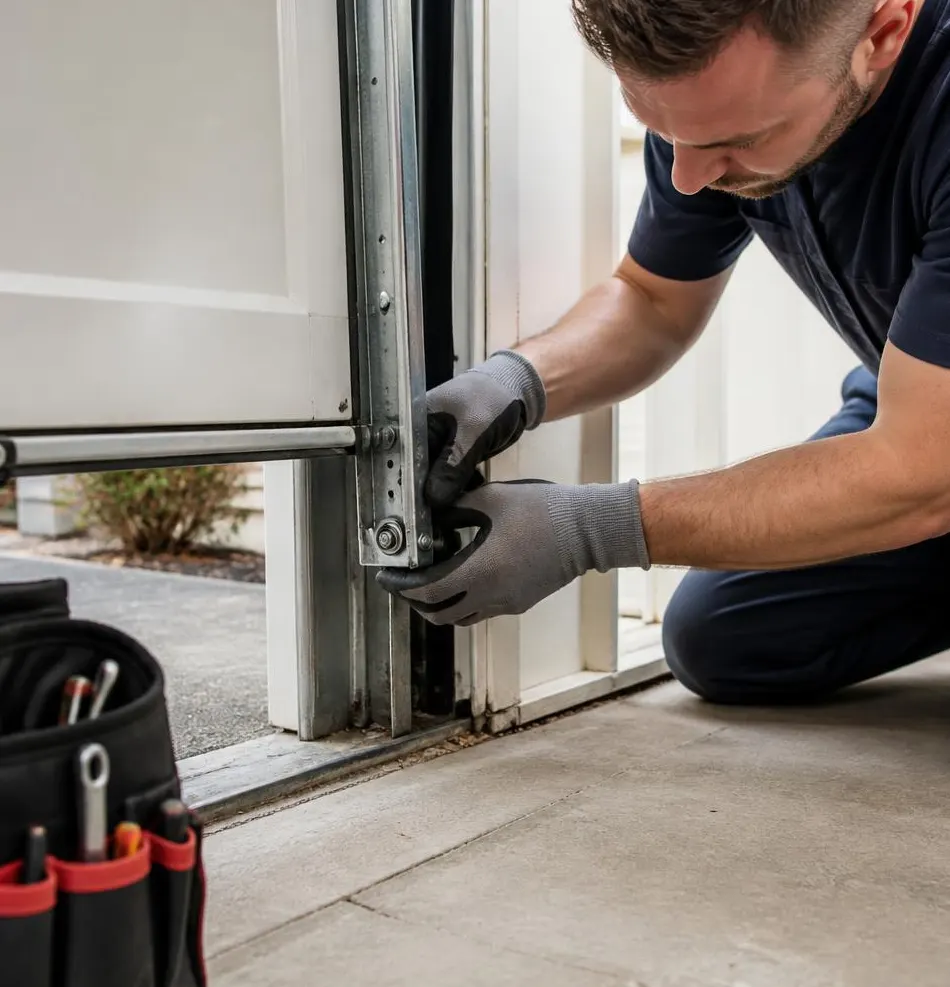
The short answer: if your garage door is squeaking or rattling but still moves smoothly and evenly, it's probably worn rollers — annoying, but not dangerous yet. If you see frayed strands on the cables near the bottom brackets, or the door looks crooked when it moves, that's a frayed cable, and it's a safety issue that needs attention right away, not a maintenance item to put off.
Why This Mix-Up Happens
Both problems can sound almost identical from inside the house — a grinding or scraping noise every time the door opens. One partner hears it and thinks "needs oil." The other hears it and thinks "something's about to break." Both can be right, just about different parts. Rollers and cables fail for different reasons and at different speeds, and knowing which one you're dealing with changes whether this is a weekend chore or a same-day call.
Why Rollers Wear Out Faster Here
In this part of Florida, humidity and afternoon downpours work against metal and nylon parts year-round. Moisture gets into the roller bearings, grit from storm runoff collects in the tracks, and the constant swelling and drying of a garage door's wood or composite panels can throw tracks slightly out of alignment. All of that adds friction, and friction is what you hear as squeaking, grinding, or a rhythmic thump as each roller passes a rough spot in the track.
Worn rollers usually show themselves gradually: noise gets a little worse over weeks or months, the door still opens and closes at a normal speed, and it stays level the whole way. That's a roller problem, and it's genuinely low-risk in the short term — annoying, not dangerous.
What a Frayed Cable Actually Looks Like
Cables are a different animal. They're under constant tension, holding a huge share of the door's weight along with the springs. Salt air if you're near the coast, plus humidity everywhere in this area, speeds up corrosion on the cable strands. Once a few strands fray, the cable is carrying its full load on fewer threads than it was built for.
Signs of a cable problem, not a roller problem:
- Visible frayed or broken strands near the bottom bracket or the drum at the top
- The door looks crooked, tilted, or hangs unevenly when it's partway open
- One side of the door seems to drop faster than the other
- A loud bang or snap, followed by the door refusing to move or moving erratically
If any of that sounds familiar, stop using the door. A frayed cable can snap without much warning, and when it does, the door can fall unevenly or the loose cable can whip and cause damage or injury. This is the scenario where the spouse who said "call someone now" was right.
What To Check This Week
- Open the door partway and look at it from outside — does it stay level, or does one corner sag?
- With the door down, look at the cables running from the bottom corners up to the drums near the springs. Any fuzzy, splayed, or rust-pitted sections mean it's time to stop DIY-ing it.
- Listen for where the noise is coming from. Noise concentrated at the rollers in the tracks, especially near corners, points to rollers. Noise or a visible wobble near the bottom brackets points to cables.
- Check the rollers themselves for cracked plastic wheels or stems that wiggle loosely in their brackets — that's wear, and it's fixable before it becomes a bigger repair.
The Trade-Off Worth Knowing
Worn rollers left alone don't stay a small problem forever. They put extra strain on the opener motor and the track, and in a region with hurricane-season wind-load demands on garage doors, a door that's already binding or dragging is more likely to struggle in a storm when it matters most. Replacing rollers early is inexpensive compared to replacing an opener motor burned out from working overtime.
When to Call San Mateo Door & Opener
If you've spotted frayed strands, a crooked door, or a loud bang followed by a stuck door, don't try to fix it yourself — call us. Our Garage Door Cable Replacement service replaces the cable and inspects the drums and springs it works with, since a failed cable often points to wear elsewhere in the system. If it's just noise and rough movement with a level door, our Garage Door Tune-Up & Maintenance service handles roller replacement, track alignment, and lubrication built for this climate's humidity and grit.
Whether you're in San Mateo, Palatka, East Palatka, or anywhere along US-17 in Putnam County, give San Mateo Door & Opener a call — we'll tell you straight whether it's a quick fix or something more, and get it done right the first time.