
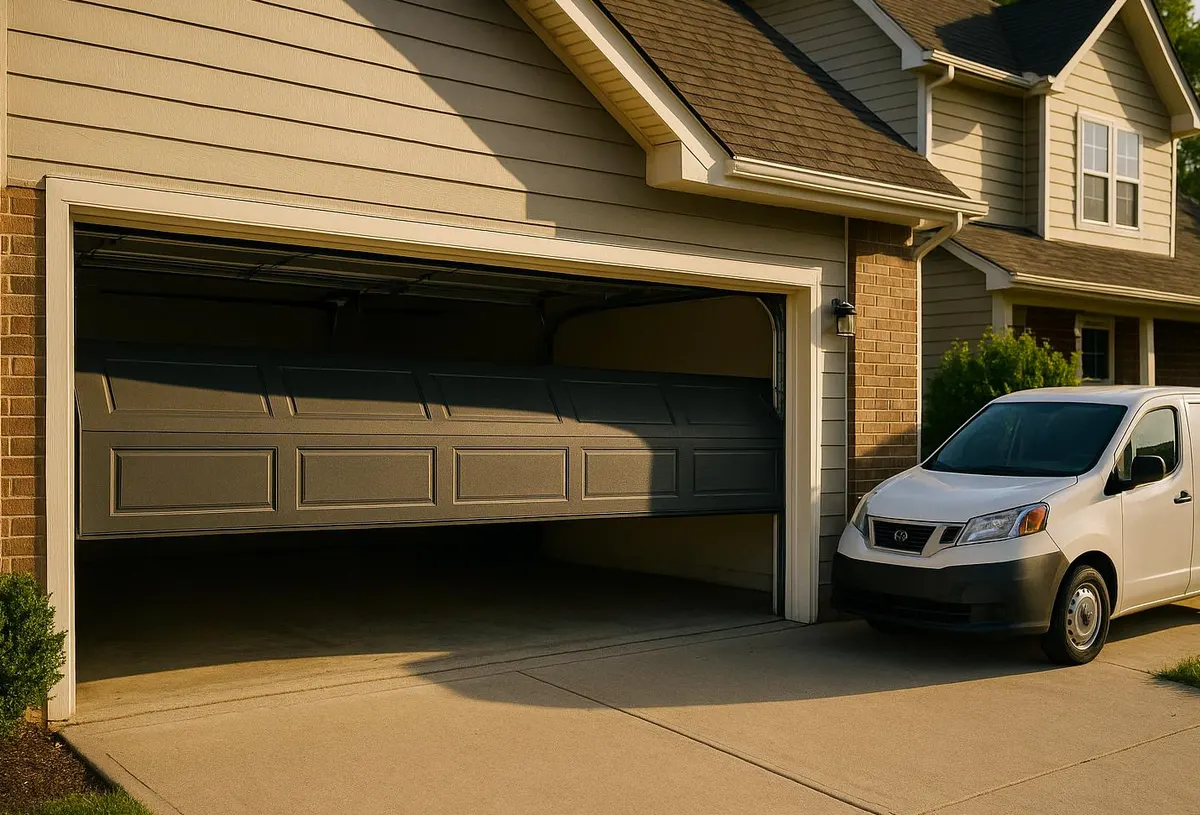
Rule of thumb: if a task only involves a wrench, a rag, and your eyes, you can probably do it yourself in twenty minutes. The exceptions are anything involving the springs, the lift cables, or a door that's jumped its track — those jobs carry enough stored tension to cause real injury, and they're where a technician earns their keep.
Early fall is a good time to run this check in San Mateo. The door has just spent months cycling through afternoon downpours, salt-tinged air, and swings in humidity that make wood swell and metal hardware creep loose. A short once-over now catches small problems before cooler, drier weather sets in.
Tools You'll Need
- Socket wrench or adjustable wrench
- Work gloves and safety glasses
- Silicone-based garage door lubricant (not WD-40 or grease, which attract grit)
- A soft cloth
- A flashlight
- A 2x4 board or similar scrap wood
- A stepladder
The Twenty-Minute Routine
- Walk the tracks with a flashlight. Look for rust spots, dents, or sandy grit built up in the track channel — common after storm season when wind-driven rain pushes debris up against the door. Wipe tracks clean with a dry cloth; don't bend them back into shape yourself if they're dented.
- Tighten the visible hardware. Humidity and heat cause wood jambs and even steel brackets to expand and contract, which loosens lag screws and track bolts over a season. Go bracket by bracket with your wrench and snug anything that's wiggled loose. Don't force a stripped screw hole — flag it for your technician instead.
- Lubricate the moving parts. Hinges, rollers, and the springs themselves (just a light coat on the coils, not the end hooks) all benefit from a seasonal spray of silicone lubricant. This is one of the best defenses against the rust that salt air and summer moisture cause, and it quiets squeaks before they turn into grinding.
- Clean the photo-eye sensors. These are the two small boxes near the bottom of the tracks. Wipe each lens with a soft, dry cloth — pollen, cobwebs, and condensation are enough to cause false stops or a door that won't close.
- Run the auto-reverse safety test. Lay the 2x4 flat on the ground where the door would close, then trigger the door to close normally. It should reverse the instant it touches the board. If it doesn't, stop using the opener until a technician checks the force and sensor settings — this is a safety feature, not a convenience one.
- Check the bottom weatherstrip seal. Look along the full width of the door for cracking, gaps, or flattened rubber. A worn seal lets water in during heavy afternoon storms and invites moisture-driven swelling in a wood door or rust on steel panels. Seals are inexpensive and usually a simple swap.
- Do a visual balance check — eyes only. With the opener disconnected (pull the red release cord), manually lift the door about halfway and let go gently. A well-balanced door stays roughly in place; one that drops or shoots upward has a spring problem. This is purely a diagnostic step — do not attempt to adjust the spring tension yourself.
- Test the remotes and keypad batteries. A dead battery often gets mistaken for a mechanical fault. Swap batteries if response is sluggish or inconsistent.
- Clear the area around the door. Sweep away leaves, sand, and any nesting material along the base of the tracks, especially if the garage sits close to landscaping that holds moisture after rain.
Where the Line Is
Everything above is low-risk because none of it involves releasing stored tension or realigning a door that's off its track. The moment you notice any of the following, stop and call for help instead of troubleshooting further:
- A spring that looks stretched, gapped, or snapped
- Frayed or kinked lift cables
- A door that's visibly crooked or hanging unevenly in the opening
- Grinding, popping, or a loud bang from the spring area
- A door that won't stay balanced during the lift test
Springs are under enough tension to cause serious injury, and a door that's slipped its track can drop unexpectedly if it's forced. These aren't places to improvise.
When to Call San Mateo Door & Opener
If your seasonal check turns up a stiff or unbalanced door, worn cables, or hardware that's rusted past a simple wipe-down, that's the point to bring in a technician rather than keep tightening and hoping. Our Garage Door Tune-Up & Maintenance service covers a full inspection — spring tension, cable condition, track alignment, and opener force settings — the things that go beyond what's safe to check from the garage floor. If the balance test showed a door that won't hold its position, that's often a spring issue, and our Garage Door Spring Repair service handles it safely with the right tools and tension bars.
If you're in San Mateo, Palatka, East Palatka, Hastings, Pomona Park, Crescent City, Elkton, or Green Cove Springs and your door didn't pass every item on this list, give San Mateo Door & Opener a call — we'll get it running smoothly before the next round of weather rolls through.